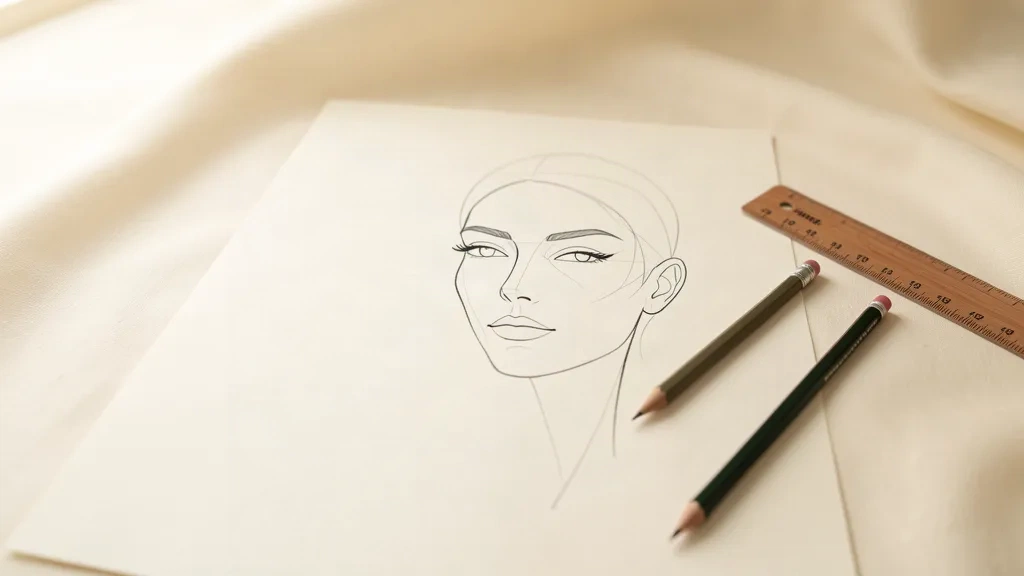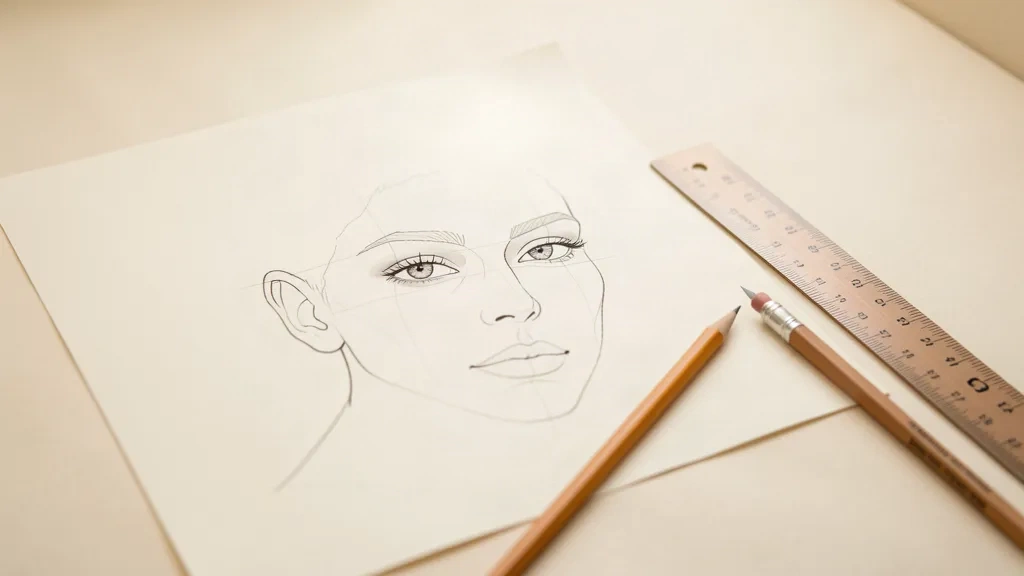
"Hunter eyes" is a slang term from online looksmaxxing communities that has spread across social media. It describes a particular look of the eye area that some people find intense or attractive. Its opposite, "prey eyes," describes rounder, more open eyes. This guide explains what the terms mean, what's really behind them, and what you can (and can't) change.
What are hunter eyes?
People who use the term usually mean a combination of eye-area features:
- Deep-set eyes under a slightly prominent brow bone.
- Little visible upper eyelid when the eyes are open (hooded or low-lidded look).
- A neutral or slightly positive canthal tilt (outer corners level with or a little higher than inner corners). See canthal tilt.
- Low-set, straight brows close to the eyes.
- Almond-shaped eyes that look narrower horizontally.
The overall effect is often described as intense, focused or brooding.
What are prey eyes?
"Prey eyes" describes the opposite combination: larger, rounder eyes, more visible upper eyelid, higher arched brows and sometimes more visible white below the iris. In everyday language these features are often called wide-eyed, open or doe-eyed, and many people find them very attractive too.
Are hunter eyes more attractive?
Online communities often present hunter eyes as "better," especially for men. In reality:
- attractiveness depends on the whole face, expression, grooming and personal taste;
- both eye types are widely considered attractive, and preferences vary by culture and individual;
- many celebrated faces have open, round eyes.
The terms are labels for natural variation, not a ranking.
What determines your eye shape?
- Bone structure: brow bone projection and eye socket depth.
- Eyelid anatomy: the height of the eyelid crease and amount of hooding.
- Fat and skin: which change with age and weight.
- Genetics and ethnicity.
Can you get hunter eyes?
- Exercises, "eye squinching" or mewing: there's no evidence they permanently change eye shape. Squinting slightly in photos can change how eyes look in that moment, which is a photo technique, not a change in anatomy.
- Sleep and health: good sleep, hydration and less puffiness make the eye area look more defined.
- Grooming: brows have a big effect on the eye area (see below).
- Cosmetic procedures exist but carry real risks and costs; discuss them only with a qualified, board-certified specialist, and only if a feature genuinely bothers you.
Grooming tips for a more defined eye area
- Keep brows fuller and straighter, closer to the eye, rather than thin and high. See eyebrow shapes.
- Reduce puffiness with sleep, less salt and alcohol, and cool compresses in the morning.
- Glasses with a strong browline frame and define the eye area. See glasses for your face shape.
- Photo angles: a slightly lowered chin and relaxed lower eyelids give the "focused" look.
- Makeup (for anyone who wears it): smudged liner in the upper lash line and matte shadow in the crease add depth.
FAQ
What are hunter eyes?
A slang term for deep-set, almond-shaped eyes with little visible upper eyelid, low straight brows and a neutral or slightly positive canthal tilt.
What is the difference between hunter eyes and prey eyes?
Hunter eyes are deep-set with low brows and little visible lid; prey eyes are rounder and more open with more visible eyelid and higher brows.
Can you change your eye shape naturally?
Not significantly. Brow grooming, rest, reduced puffiness and photo angles change how the eye area looks.
Are hunter eyes genetic?
Mostly, yes. Eye shape is largely determined by bone structure and eyelid anatomy.
Are prey eyes unattractive?
No. Open, round eyes are widely considered attractive. Both labels describe normal variation.