"How attractive am I?" is one of the most common questions people type into search engines, and there's no shortage of quizzes, apps and 1-to-10 scales promising an answer. This guide explains how attractiveness scales and tests work, what research says about what people find attractive, why ratings vary so much, and what you can actually do with the result.
What is an attractiveness scale?
An attractiveness scale is any system for rating appearance, usually on a 1-to-10 scale. Researchers use rating scales in studies by asking many people to rate the same faces; online tests and apps estimate a score from facial measurements in a photo.
How online attractiveness tests work
Most AI attractiveness tests, including our attractiveness test, work like this:
- Detect facial landmarks: corners of the eyes and mouth, nose tip, jaw edges, brows.
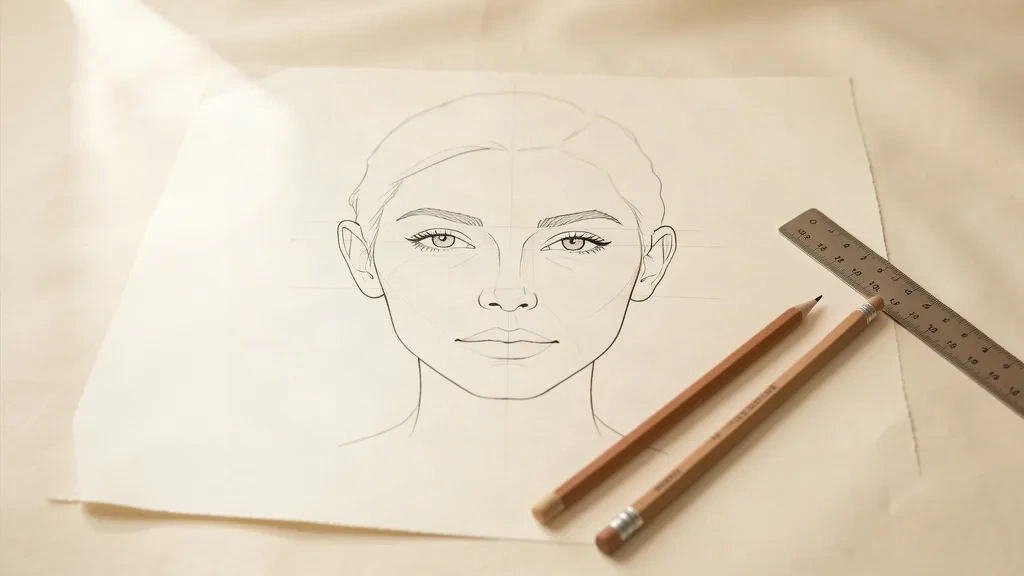
- Calculate ratios and symmetry: comparing left and right sides and measuring proportions such as facial thirds and eye spacing.
- Compare with reference values: for example, averages from many faces or classic proportions like the golden ratio.
- Summarize into a score.
These tools measure geometry in one photo. They can't see personality, voice, style or the way your face moves, and the score changes with lighting, angle and expression.
What research says people find attractive
Studies across many cultures suggest that, on average, people tend to rate these features as attractive:
- Averageness: faces close to the average of a population (often surprisingly attractive).
- Symmetry: a modest effect. See facial symmetry.
- Healthy-looking skin: even tone and texture.
- Expression: genuine smiles consistently increase ratings.
- Grooming and style: hair, brows, facial hair and clothing.
At the same time, individual and cultural preferences vary a lot. Two people can rate the same face very differently, and familiarity and personality strongly shape how attractive we find someone we know.
Why your score changes from photo to photo
- Lens distortion: close-range selfies enlarge the nose and shrink the ears.
- Lighting: harsh overhead light deepens shadows under the eyes.
- Angle: slight head tilts change measured proportions.
- Expression: a relaxed or smiling face reads differently from a tense one.
If your score swings by a point or more between photos, that's normal and shows how much presentation matters.
Is "how attractive am I" even the right question?
A single number is a blunt tool. More useful questions:
- What haircut suits my face shape? Use the face shape detector.
- Which colors make my skin look best? Try the AI color analysis.
- How can I look better in photos? See the tips below.
Practical ways to look your best
- Get a haircut that suits your face shape, the biggest single visible change. Preview cuts with the hairstyle try-on.
- Groom brows and facial hair. See eyebrow shapes and beard styles.
- Wear your best colors near your face.
- Sleep, hydrate and use sunscreen for clearer skin.
- Improve posture.
- Practice photos: soft window light, camera at or slightly above eye level, a relaxed smile.
A word on mental health
Rating apps can be fun, but if checking your appearance or scores starts to affect your mood, sleep or confidence, take a break and talk to someone you trust. Your value is not a number.
FAQ
How do I know if I'm attractive?
There's no objective answer, because attractiveness depends on the viewer. Signs that you're seen as attractive include people responding warmly to you, but grooming, style and expression all shape first impressions more than a score.
How accurate are attractiveness tests?
They accurately measure geometric features in one photo, but they can't capture personality, expression or personal taste, and results vary with lighting and angle.
What is a 7 on the attractiveness scale?
On most 1-to-10 scales, 5 is average, so a 7 is above average. Scales aren't standardized, and ratings vary from person to person.
What makes a face attractive?
Research points to averageness, symmetry, healthy skin, expression and grooming, combined with individual and cultural preferences.
Can I become more attractive?
Yes. Haircuts, grooming, skincare, fitness, posture, flattering colors and confident expression all change how attractive you look to others.