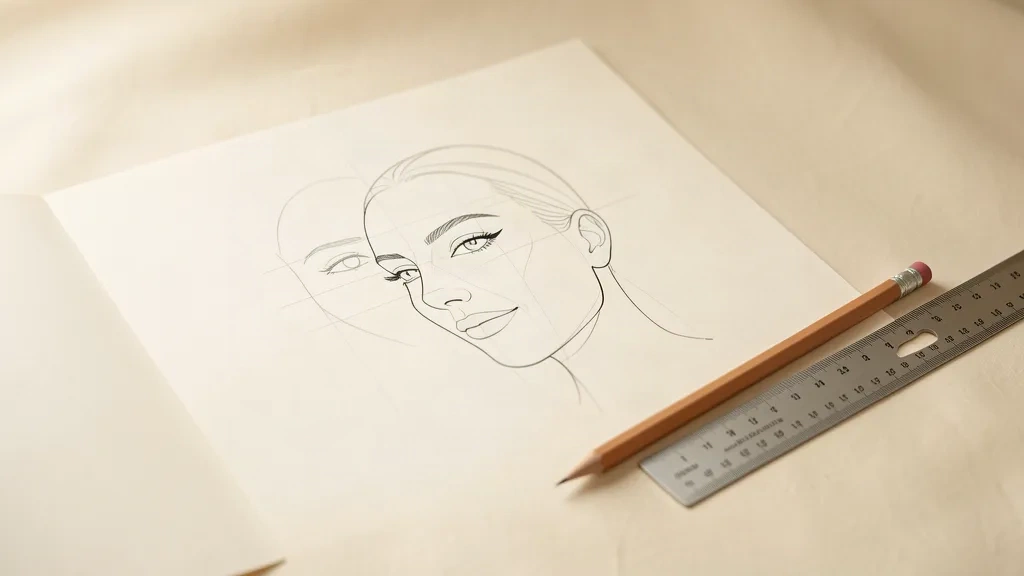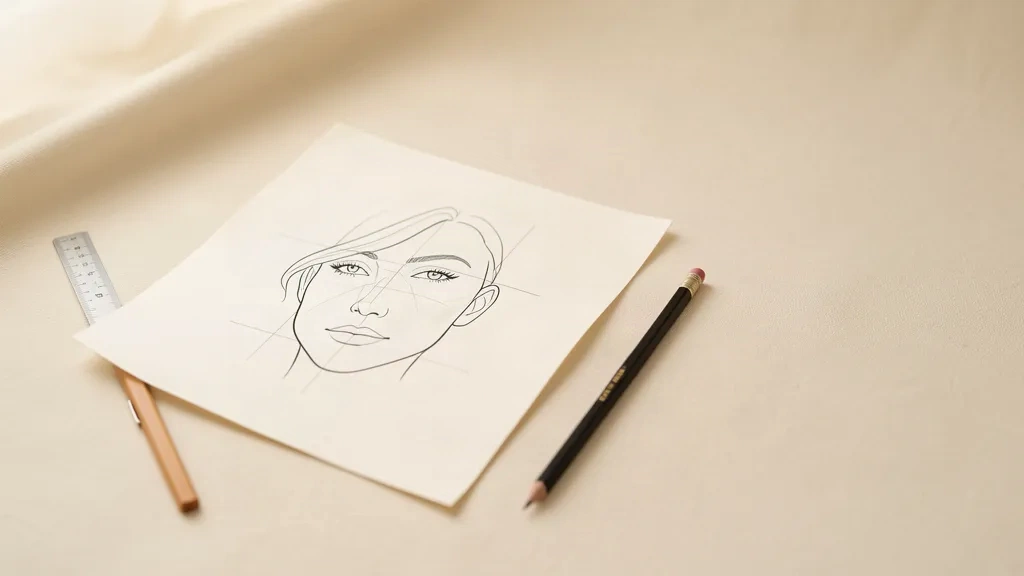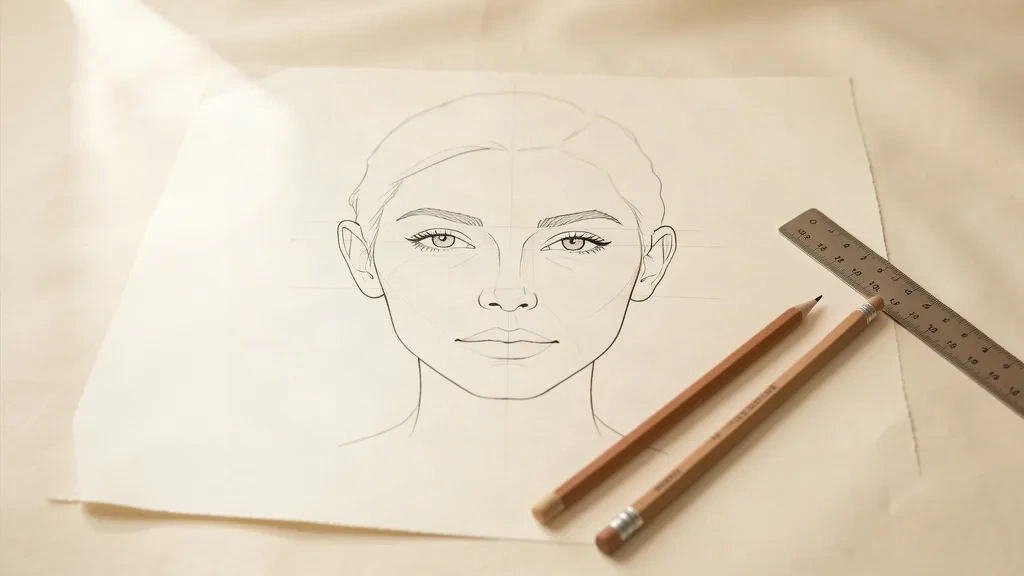
If you've ever noticed that one eye sits slightly higher, one side of your smile lifts more, or your "good side" looks different in photos, you've noticed facial asymmetry. It's completely normal. This guide explains what facial symmetry is, why nearly every face is asymmetrical, what the research says about symmetry and attractiveness, and simple styling tricks that make a face look more balanced.
What is facial symmetry?
Facial symmetry describes how closely the left and right halves of your face mirror each other. It is measured by comparing paired points, such as the corners of the eyes, the edges of the nostrils, the corners of the mouth and the angles of the jaw, across a center line.
No face is perfectly symmetrical. Studies of facial measurements consistently find small differences between the two sides in almost everyone.
Is an asymmetrical face normal?
Yes. Mild asymmetry is the norm, not the exception. Common examples:
- one eyebrow or eye slightly higher,
- a slightly crooked nose,
- one cheekbone more prominent,
- a smile that lifts more on one side,
- one side of the jaw slightly fuller.
Most people never notice these differences in others; we notice them in ourselves because we see our faces in mirrors and photos so often.
What causes facial asymmetry?
- Genetics and development: natural variation as the face grows.
- Habits: chewing mostly on one side, sleeping on one side, resting your chin on one hand.
- Dental factors: bite and tooth alignment can affect the lower face.
- Aging: skin and fat change unevenly over time.
- Sun exposure: one side of the face often gets more sun (for example, the side facing a car window).
- Injury or medical conditions: sudden or significant asymmetry, especially with weakness, drooping or numbness, needs prompt medical attention.
Does symmetry affect attractiveness?
Research does suggest people tend to rate more symmetrical faces as slightly more attractive on average, possibly as a cue of health and development. But:
- the effect is modest, and other factors such as averageness, skin, expression and grooming also matter;
- perfectly symmetrical faces, created by mirroring one half of a photo, often look strange or less natural to people;
- small asymmetries can be part of what makes a face recognizable and appealing.
How to test your facial symmetry
- Take a straight-on photo at eye level with a neutral expression and even lighting.
- Draw a vertical line through the center of your face (between the eyes, down the nose to the chin).
- Compare the heights of your eyes, brows, nostrils, mouth corners and jaw angles.
Or upload a photo to the attractiveness test, which measures symmetry automatically and shows the lines on your photo.
Remember: phone front cameras distort faces at close range, and mirror images flip your face, so a photo can look "off" even when nothing is unusual.
How to look more symmetrical
You can't change bone structure with exercises, but styling changes how symmetry is perceived:
- Part your hair on the side that makes your face look most balanced; try both.
- Shape your brows so the arches line up; brow pencil can even out a lower brow. See eyebrow shapes.
- Use makeup: a little more contour or highlight on one side can balance cheekbones.
- Beard grooming: trim slightly more on the fuller side of the jaw.
- Glasses: frames with a strong horizontal line can make slightly uneven eyes less noticeable.
- Find your good side for photos and angle your face slightly toward the camera.
- Change habits: chew on both sides and avoid always sleeping on the same side.
Do facial symmetry exercises work?
There is little scientific evidence that facial exercises meaningfully change facial symmetry in healthy adults. They may help in specific medical rehabilitation cases under professional guidance. For everyday asymmetry, styling and habits make a bigger visible difference.
FAQ
Is it normal to have an asymmetrical face?
Yes. Almost every face has some asymmetry. It's usually only noticeable to the person themselves.
Does facial symmetry make you more attractive?
Studies suggest symmetry plays a small role, but averageness, skin, expression and grooming matter too, and perfectly symmetrical faces can look unnatural.
How can I make my face more symmetrical?
Use styling: a flattering hair part, balanced brows, makeup or beard grooming, and good photo angles. Avoid habits like always chewing on one side.
Why does my face look asymmetrical in photos?
Close-range front cameras distort features, lighting creates uneven shadows, and you're used to your mirrored reflection, so photos look unfamiliar.
When should I worry about facial asymmetry?
If asymmetry appears suddenly, or comes with drooping, weakness, numbness or pain, seek medical help right away.