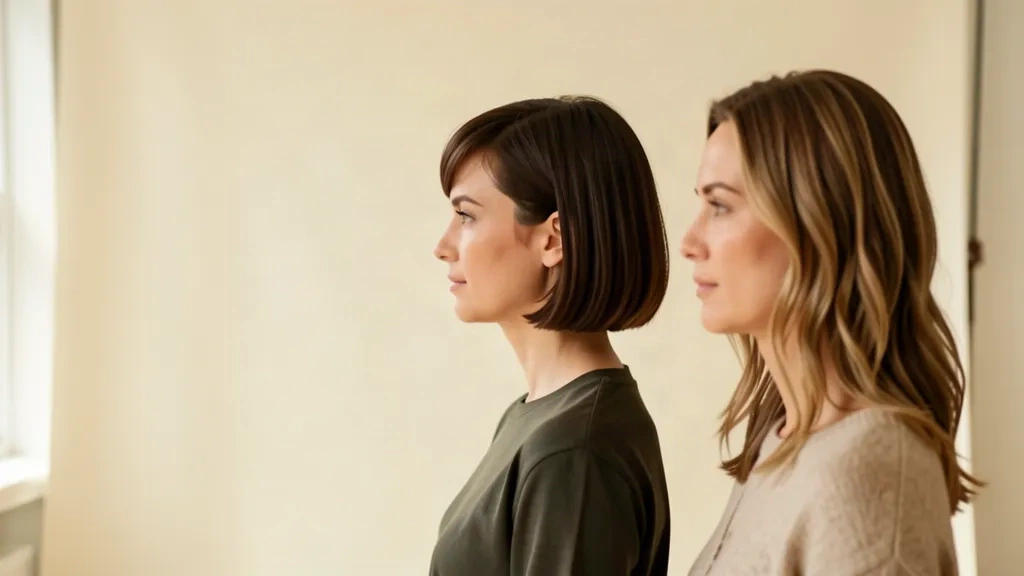
The Kibbe system is a style framework created by image consultant David Kibbe. Rather than labeling bodies by measurements (like "pear" or "hourglass"), it looks at your overall lines, bone structure and softness, and suggests clothing lines and fabrics that harmonize with them. It has become very popular online. Here's how it works and how to explore your type.
The idea behind Kibbe: yin and yang
Kibbe describes features on a spectrum:
- Yang: sharp, angular, long, straight, bold.
- Yin: soft, rounded, curved, small, delicate.
Your bone structure (height, frame, shoulders, facial bones), flesh (softness and curves) and facial features each fall somewhere on that spectrum. The balance points you toward a type.
The 5 families and 13 types
Dramatic (mostly yang)
- Dramatic (D): long, narrow, sharp lines; elongated and angular.
- Soft Dramatic (SD): long and sharp bone structure with added softness and curves.
Natural (soft yang, blunt width)
- Flamboyant Natural (FN): long, broad or blunt frame with relaxed, open lines.
- Soft Natural (SN): moderate height, slightly blunt frame with soft curves.
- (Natural, the pure type, appears in older versions of the system.)
Classic (balanced)
- Dramatic Classic (DC): balanced and symmetrical with a slight sharpness.
- Soft Classic (SC): balanced and symmetrical with slight softness.
- (Classic, the pure type, appears in older versions.)
Gamine (a mix of yin and yang in a petite frame)
- Flamboyant Gamine (FG): petite with sharper, more angular lines.
- Soft Gamine (SG): petite with more softness and curves.
- (Gamine, the pure type, appears in older versions.)
Romantic (mostly yin)
- Theatrical Romantic (TR): small, delicate frame with sharper facial features and curves.
- Romantic (R): soft, rounded and lush throughout.
The full list of 13 includes the pure types; newer versions of the system use 10.
How to find your Kibbe type
- Look at your vertical line. Do you look long and elongated, moderate, or compact and petite? (This is about appearance of length, not exact height.)
- Assess your bone structure. Are shoulders and jaw sharp and narrow, broad and blunt, balanced, or small and delicate?
- Assess softness. Is your body and face more straight and lean, or soft and curved?
- Look at how clothes behave on you. Which fits and fabrics make you look "put together" versus overwhelmed or swamped?
Many people find it easier to look at the clothing guidelines for two or three candidate types and see which feels right.
Example style lines by family
| Family | Lines that tend to work |
|---|---|
| Dramatic | long, sharp, sleek, monochrome columns, strong shoulders |
| Natural | relaxed, unconstructed, open, textured fabrics |
| Classic | tailored, symmetrical, polished, moderate details |
| Gamine | cropped, sharp, broken lines, playful mixes |
| Romantic | soft, draped, waist-defined, rounded details |
Kibbe and color analysis
Kibbe is about lines and shapes; seasonal color analysis is about colors. They work well together: Kibbe tells you what silhouettes to wear, and your color season tells you which colors. Find your colors with the AI color analysis or the color analysis seasons guide.
Keep it in perspective
No style system can describe every body perfectly. Use Kibbe as a source of ideas, not a set of rules, and wear what makes you feel good.
FAQ
What are the Kibbe body types?
Dramatic, Soft Dramatic, Flamboyant Natural, Soft Natural, Dramatic Classic, Soft Classic, Flamboyant Gamine, Soft Gamine, Theatrical Romantic and Romantic, plus the pure Natural, Classic and Gamine types in older versions.
How do I find my Kibbe body type?
Assess your vertical line, bone structure, softness and how clothing lines look on you, then compare the descriptions of a few candidate types.
Is Kibbe based on body measurements?
No. It focuses on overall lines, bone structure and softness rather than exact measurements.
What is the difference between Kibbe and color analysis?
Kibbe guides silhouettes and fabrics; seasonal color analysis guides colors.
Can your Kibbe type change?
Bone structure doesn't change, so your core type stays similar, though weight changes can shift softness.