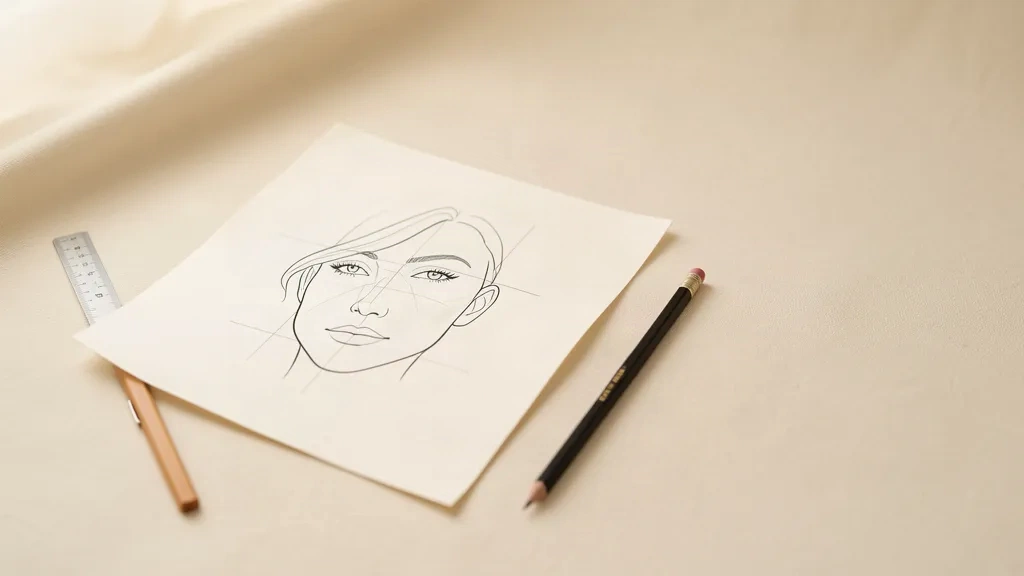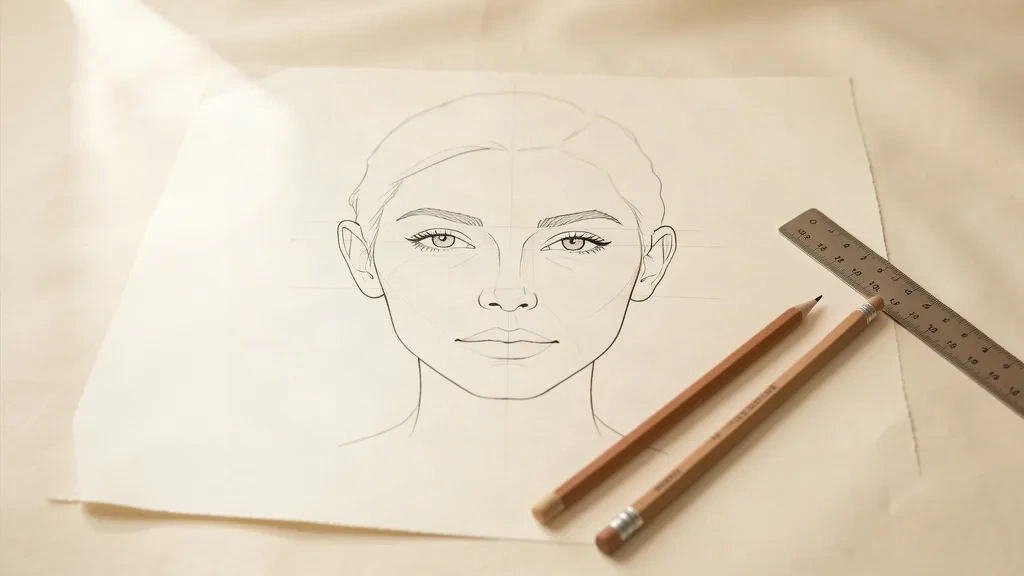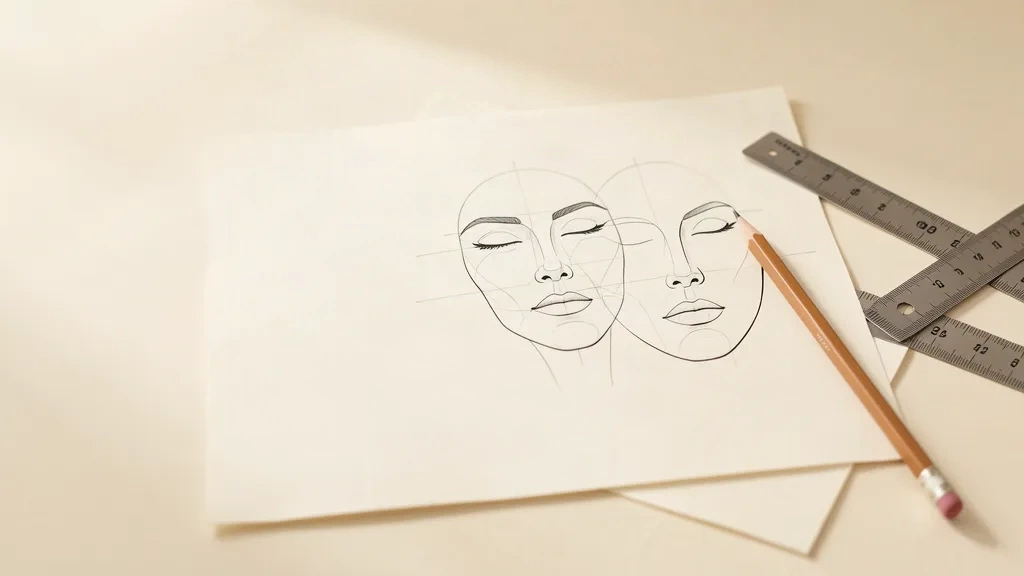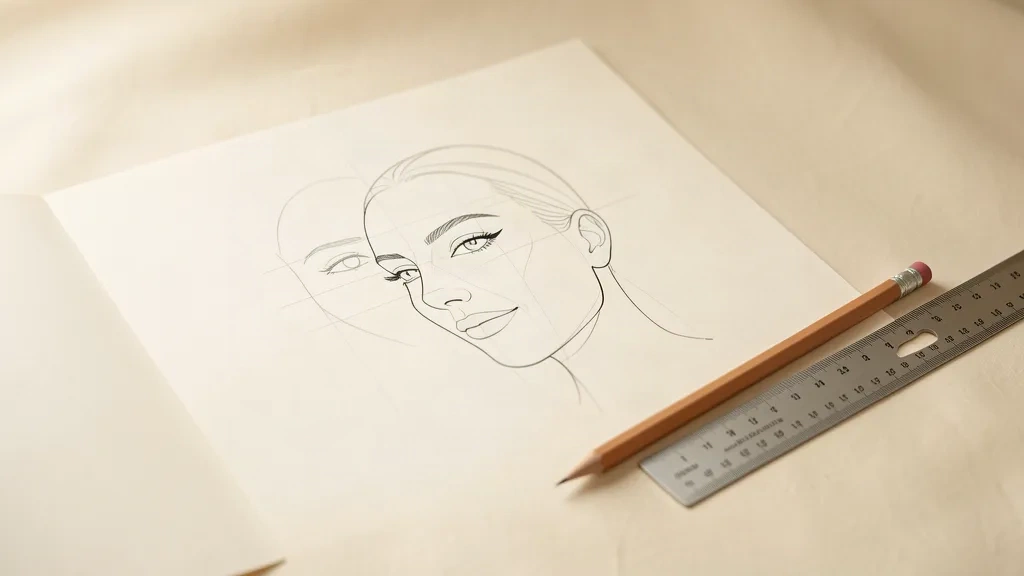
Facial harmony is a way of describing how well the features of a face fit together: the size and spacing of the eyes, nose, lips and jaw in relation to each other and to the overall outline. It is a descriptive idea from art, dentistry and beauty writing, not a score. This guide explains what facial harmony means, what affects it and how to work with your own.
What facial harmony means
Harmony is about relationships, not individual features. A wide nose can sit well with wide-set eyes and a full jaw, and a narrow jaw can balance a small nose. People talk about features being in proportion, in balance or in keeping with each other. Harmony is also separate from symmetry and from any single ideal, since many faces that people find striking are not especially symmetrical.
What contributes to facial harmony
- Proportion: the relative length of the upper, middle and lower face. See facial proportions.
- Symmetry: how closely the left and right halves match. Almost nobody is perfectly symmetrical, as our guide to facial symmetry explains.
- Feature balance: the size and spacing of the eyes, nose and lips.
- Skin and expression: skin tone evenness, texture and expression change how a face reads at least as much as structure does.
- Grooming and styling: hair, brows, facial hair and glasses affect perceived balance.
Why photos change how harmonious a face looks
A photo is not a neutral record. The lens distance changes proportions: a close selfie enlarges the nose and shrinks the ears, while a photo from further away flattens that effect. The angle changes the apparent jaw and forehead. Light changes depth, so overhead light adds shadows under the eyes and side light emphasizes asymmetry. Expression, a slight smile and head tilt change it again.
For any measurement or tool, use a straight-on photo at eye level, from at least arm's length, with even light and a neutral face. And remember that no photo shows how you look in motion, which is how other people see you.
Styling for your own facial harmony
You can work with your features rather than against them.
- Hair: a haircut that suits your face shape adds balance. Bangs shorten a long forehead, volume at the crown lengthens a round face and layers soften a strong jaw. See what haircut should I get.
- Brows: a shape that works with your eye spacing. See eyebrow shapes.
- Glasses: frames that contrast with your face shape. See glasses for your face shape.
- Facial hair: a beard can change the apparent length or width of the lower face.
- Color: clothes and makeup colors in your palette make skin look even and eyes look bright.
A quick self-check with a photo
Take a straight-on photo in even light with a relaxed face. Look at the whole picture first, not at single features. Then compare three things: the height of your forehead, the length of your nose and the length of your lower face. If one looks much longer or shorter than the others, that tells you where styling can help, for example bangs for a tall forehead or a beard for a shorter chin. The face shape detector can measure these relationships from the same photo.
Facial harmony is not attractiveness
Studies of faces suggest that averageness, symmetry and skin quality contribute to how attractive people rate a face, but the effects are modest and vary with culture and personal taste. Expression, warmth and confidence matter a lot in real life. Treat harmony as a vocabulary for styling decisions, not a verdict. If something about your face bothers you in a way that affects your well-being, talk to a doctor or a counselor rather than rely on an online measurement.
Measure your proportions
If you are curious about your proportions, try the golden ratio face calculator. It shows your measurements on your own photo, along with a note that they are geometry, not a score.
Related reading: facial proportions, facial symmetry and face shapes.
FAQ
What is facial harmony?
It is how well the features of a face balance with each other and with the overall outline. It describes relationships between features rather than any single one.
Is facial harmony the same as symmetry?
No. Symmetry compares the left and right halves. Harmony is about proportion and balance across the whole face.
How is facial harmony measured?
Informally, with proportions such as facial thirds and fifths. These are guides from art and dentistry, and real faces vary widely.
Can you improve facial harmony?
Bone structure is fixed, but hair, brows, glasses, facial hair, color and good light change how balanced a face looks.